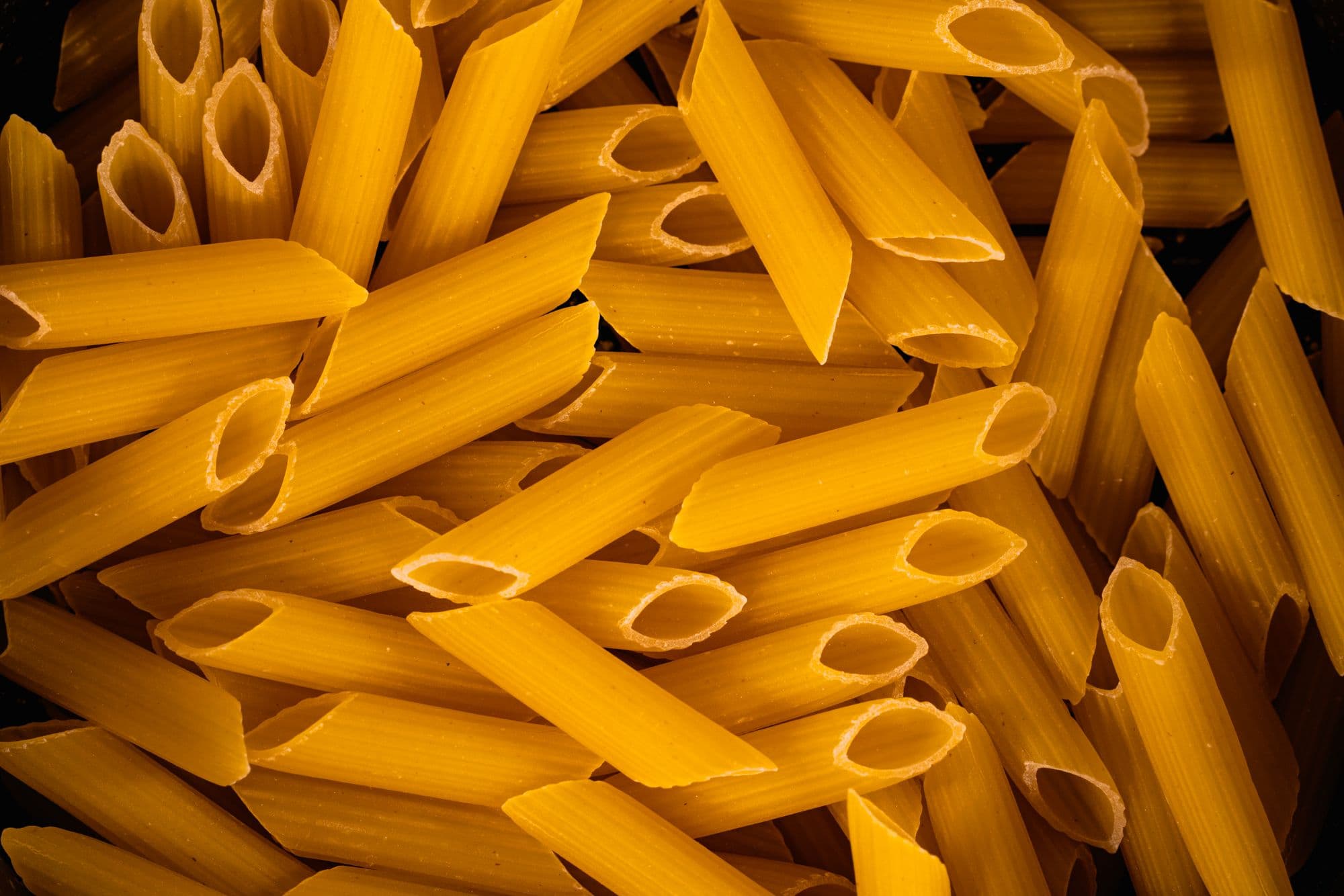
Angle-cut tubes named for the quill.
- Italian
- Penne
- Category
- Short tube
- Region
- Genoa
- Pastas
- 2 catalogued
The story
Penne is one of the few pasta shapes with a documented birthday. On 11 March 1865, a Genoese pasta maker named Giovanni Battista Capurro patented a machine in San Martino d'Albaro that could cut tubes cleanly on the diagonal, without the crushing and jagged edges that hand-cutting with scissors produced. The name comes from penna — "quill" or "pen" — because the slanted cut echoes the nib of a steel writing pen. From Liguria the shape spread across Italy and became one of the most versatile tubes in the pantry.
Shape & purpose
A straight tube, three to five centimeters long, with both ends cut at a sharp diagonal — the angled mouth is the identity, giving penne its quill-like point and a wide opening that scoops sauce inside. It comes two ways: penne lisce, smooth, the original 1865 form; and penne rigate, ridged, developed later to grip sauce more aggressively. The ridges are a surface variant, not a different pasta — the diagonal cut is what makes it penne.
Penne traps sauce twice: inside the open tube and, in the rigate version, along the ridges. It's a workhorse for chunky and creamy sauces alike — sturdy enough for the oven in a baked pasta, shapely enough to hold its own in a quick weeknight sauté. Smooth lisce suits silkier, oil-based dressings; ridged rigate is the one to reach for with anything thick.
Sauce pairings
- 01All'arrabbiataGarlic, tomato, and dried chili; Roman heat, penne's classic.
- 02Alla vodkaTomato, cream, a splash of vodka; the ridges hold it beautifully.
- 03Al fornoBaked with sauce and cheese; the tubes stay firm in the oven.
- 04Insalata di pastaCold with vegetables and vinaigrette, the diagonal cut catching dressing.
Cooking technique
Penne rigate wants about eleven minutes for al dente; lisce cooks a touch faster and can turn soft sooner, so taste early. Cook it a minute short of the package and finish in the sauce so the tubes fill and the ridges grip. Don't rinse — the surface starch is what makes sauce cling. For baked penne, undercook it further, since the oven takes it the rest of the way.